
Richard “Zeke” Berner ’23 helps clients understand their options, find their footing, and have a voice in the courtroom. It’s work that brings together two things he discovered at Widener Law Commonwealth: a love of litigation and a belief that practicing law means making a difference in someone’s life.
Richard ‘Zeke’ Berner ’23
Image
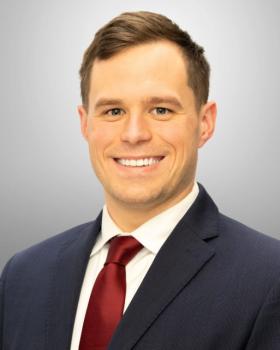
An associate at Johnson Duffie, Berner focuses on criminal defense and general civil litigation. He joined the firm in March 2026 after more than two years as an assistant district attorney in Cumberland County, where he gained experience trying cases before juries and arguing appeals before the Pennsylvania Superior Court.
Now, he brings that courtroom experience and understanding of the prosecution’s perspective to representing individual clients. He particularly enjoys working directly with people, explaining the legal process, and helping them move forward.
“I take a lot of enjoyment in being able to help people navigate those situations,” Berner said.
That personal connection reflects a lesson he took from Professor Randy Lee, whose classes emphasized the responsibility lawyers have to the people they serve. Berner studied torts and professional responsibility with Lee and remembers a professor who approached the law with both practical insight and care for others.
“He genuinely cares about teaching you and influencing the next generation of people to go out into the world and do good things,” Berner said.
Berner’s own interest in becoming a lawyer began with a ninth-grade civics debate. Growing up in Raccoon Township in western Pennsylvania, he enjoyed the exchange of ideas and the challenge of supporting an argument with facts. He later double-majored in English and political science at Washington & Jefferson College.
The first in his immediate family to graduate from college and attend law school, Berner knew he wanted to build his career in Pennsylvania. Widener Law Commonwealth’s location in Harrisburg appealed to him for its proximity to the state legislature, government agencies, and opportunities to see the law at work.
He arrived with an interest in business and transactional law. Through classes and internships, he found himself drawn to criminal law and the courtroom.
Internships with two district attorneys’ offices gave him an opportunity to explore that interest firsthand. A criminal procedure course with Professor Michal Buchhandler-Raphael helped solidify his decision to pursue it professionally.
Berner also found opportunities on campus to develop the skills he would use in practice. He served as president of the Moot Court Honor Society, now the Appellate Advocacy Honor Society, and participated in an external family law competition.
Although family law wasn’t his intended practice area, the competition gave him room to explore a different subject while strengthening his research, writing, and oral advocacy. He values the opportunity student advocacy programs offer to practice those skills with guidance before taking responsibility for a client’s case.
His work on law review sharpened another habit he relies on today: attention to detail. Reviewing citations and tracking down sources taught him to look closely at the small elements that make an argument accurate and polished.
Professor Amanda Sholtis helped establish the foundation for his legal writing during his first year. Berner credits her engaging classes and careful instruction with shaping how he builds an argument, a skill he continues to use when drafting motions and briefs.
After graduating in 2023, he put those lessons to work in the Cumberland County District Attorney’s Office. With guidance from colleagues, he had the opportunity to take the lead on cases and develop his own approach to preparing and presenting them.
During his time there, Berner tried several cases before juries and argued criminal appeals before the Pennsylvania Superior Court. He also oversaw the Cumberland County Drug Task Force, advising law enforcement on investigations.
The experience helped him grow comfortable with the responsibility of courtroom advocacy. Today, his schedule might include a morning court appearance in one county, an afternoon spent drafting a motion, and a consultation with a prospective client to discuss the case and available options.
His connections to central Pennsylvania have grown along with his practice. Berner initially expected to return to the Pittsburgh area, but the relationships he developed helped him envision a future closer to his law school.
He points to Widener Law Commonwealth’s local alumni community as a particularly valuable resource for students and graduates, with connections that extend well beyond any one graduating class.
“There is a sense of camaraderie amongst the various different classes that have left Widener Law Commonwealth,” he said.
Outside the office, Berner volunteers with United Cerebral Palsy of Central Pennsylvania, contributing his skills to an organization serving people with disabilities in central Pennsylvania. He also makes time for running. He completed a marathon in Buffalo in May and is preparing for another in Philadelphia.
Having something to enjoy beyond legal work, he said, helps him maintain balance.
For students exploring their own paths, Berner encourages the same openness that helped him discover his place in litigation. Trying unfamiliar work and taking opportunities to speak, write, and advocate can reveal interests students haven’t yet considered.
“If it hadn’t been for me willing to take that kind of chance, I don’t think I would have found litigation as being primarily what I like to do in the legal field.”
Interview conducted in Fall 2026.


