
From Paralegal to Guantanamo Prosecutor: How a 9/11 Witness Found His Calling in the Law
Stephen Romeo '07
Image
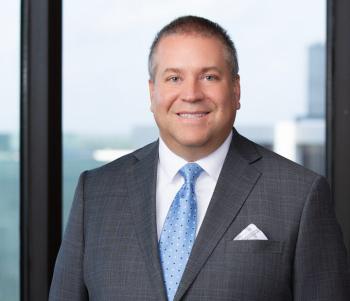
Stephen Romeo '07 was in New York City on September 11, 2001, surrounded by thousands of people desperate to help and with nothing to do. Twenty years later, he was at Guantanamo Bay arguing motions in the successful conviction of a high-value detainee tied to the attacks.
Romeo, now a partner at Thompson, Coe, Cousins & Irons, LLP in Houston, spent nearly a decade in technology sales after graduating from Villanova University in 1992, before a stint as a contract paralegal at Pfizer's legal department in New York City confirmed what he already suspected about himself. He liked people. He liked thinking analytically. He liked the idea of actually advising someone on something that mattered. Sales was fine. Law felt right.
He enrolled in Widener University Commonwealth Law School’s evening division in 2003, working full time at a Harrisburg insurance defense firm during the day. The evening program suited him. He joined the law journal, competed in moot court and landed an externship at the U.S. Attorney's Office. Two professors left a lasting impression. John Gedid, professor emeritus, shaped how Romeo thinks about the business of practicing law and professional conduct, while Professor Randy Lee taught him to work through legal problems methodically, a habit that never left him.
"The way he broke down seemingly complicated legal claims into bite-sized pieces for anyone to understand, that's how I communicate legal issues to clients and judges today," Romeo said of Lee.
After graduating, Romeo passed the Pennsylvania bar and took a position at a mid-sized Harrisburg firm for about three years before deciding he needed a change. He moved to Charlotte, passed the North Carolina bar and opened a solo practice. Like many solo practitioners, he handled whatever came through the door, from criminal defense and civil litigation to estate planning and transactional work.
While building that practice, Romeo found himself returning to the same thought that had lingered since Sept. 11. He had watched the attacks unfold from lower Manhattan and spent years looking for a meaningful way to serve. Military service kept pulling at him.
The Pennsylvania Army National Guard had no JAG openings when Romeo first applied after law school, so with help from Harrisburg attorney and Army Colonel, Bob DeSousa, he broadened his search. He ended up being commissioned as a JAG officer with the West Virginia Army National Guard, which, as he points out with some amusement, was actually a shorter drive from Charlotte than it would have been from Harrisburg. In 2013, with a solo practice running and a deployment opportunity in front of him, he went to Kandahar, Afghanistan.
Image
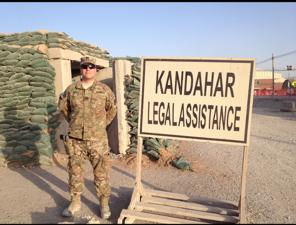
There, Romeo served as a judge advocate general officer, or JAG, advising commanders and working in the legal assistance office, often at 3 a.m. to reach stateside courts during business hours. One soldier had a judgment entered against him over a business deal gone bad while he was overseas, and creditors were trying to garnish his wages. Romeo got on the phone with the court in New Jersey and made sure the case was paused until the soldier could come home and fight it himself. He also oversaw claims brought by Afghan civilians who believed they had been harmed by U.S. military activity.
“Most soldiers are not on trial before a military tribunal because they were accused of violating a law or committed other misconduct. The only time they would ever communicate with a JAG officer is when they come into a legal assistance office for real-world advice. I felt grateful that I was able to help them with their issues so they could focus on fighting for our country.”
When Romeo returned from Afghanistan, the opportunities kept compounding in ways he did not entirely plan. He joined Army Trial Defense Service, which is the Army’s public defender organization, handling court-martial cases and advising service members. Later, he joined the National Guard Bureau in Arlington, Virginia, where he helped design training programs for defense attorneys nationwide while continuing to work cases.
His military responsibilities continued to grow. Eventually, Romeo was assigned to the Office of Military Commissions at Guantanamo Bay as part of a prosecution team working the case of a man who was involved in the bombing of the JW Marriott in Jakarta, Indonesia in 2003 and had been in contact with Khalid Sheikh Mohammed with plans to bomb gas stations across the United States. In this case, the team secured the only successful conviction of a high-value detainee in the history of the commissions to date. He later joined the prosecution of the alleged mastermind of the 2000 USS Cole bombing, one of the longest-running and most document-intensive cases in American legal history, with a prosecution team of roughly eight attorneys and millions of pages of material to work through.
The proceedings unfolded under intense scrutiny. A New York Times reporter was embedded with the commission, victims' families had access to observe and international media closely followed developments in the case. Hostile judges and skeptical coverage became part of the daily landscape.
"I've argued against hostile judges in front of unsympathetic international media," Romeo said. "If I could deal with that, I could deal with anything."
He notes, almost as a footnote, that while he was serving in a unit under the Fourth Infantry Division in Afghanistan, the division's judge advocate was Col. Paul "P.J." Perrone '93, a fellow Widener Commonwealth Law School graduate.
By the time his military service began winding down, Romeo and his wife were thinking about where they wanted to build the next chapter of their lives. They wanted to stay in the south, where they had built roots between Charlotte, North Carolina and Atlanta, Georgia. Houston, Texas fit.
During his interview with Thompson Coe, Romeo argued that complex terrorism prosecutions and high-stakes civil litigation require many of the same skills: managing massive document collections, navigating competing institutional interests and performing under pressure. The firm agreed. He was hired as a senior associate and elected partner last year.
Years of litigation, military prosecutions and high-pressure courtroom work have shaped how Romeo approaches legal problems today. One lesson stands above the rest: understanding why the other side believes in its position.
When a younger attorney comes to him convinced a case is a sure thing, Romeo tends to pump the brakes. He has been embarrassed by sure things. He also threw long shots against the wall and watched them stick.
The advice he gives most often is deceptively simple: stop focusing on your own argument and figure out why the other side believes theirs. Not to sympathize, but to understand. Many people dismiss the famous McDonald's coffee case, he said, but the plaintiff's argument was never that coffee should not be hot. It was that customers do not expect third-degree burns. Understanding why the other side believes its position is often the first step toward answering it effectively.
"Even if you think an opposing party’s side is complete nonsense, they still believe it," Romeo said. "And once you understand that, see if there's even a grain of truth to it. Then you can work on finding a solution."
He also offers a less glamorous piece of advice, delivered without apology: litigation is hard, and it is not for everyone. Romeo describes a career built not on natural talent but on accumulating experience, getting things wrong, getting chewed out by judges, being caught off guard by clients and opposing counsel, and learning each time. He is not at the stage where he has seen everything. He is at the stage where nothing surprises him, and he treats that as a meaningful distinction.
More than two decades after deciding law was the right path, Romeo continues to balance private practice with military service.
"I'm not at the stage where I've seen everything," he said, reflecting on years of litigation, deployments and high-stakes prosecutions. "But I'm definitely at the stage where nothing surprises me."
Interview conducted in Summer 2026.


