
Three years of law school taught them the law. The weeks leading up to the bar exam taught them something else entirely: how to trust themselves under pressure, lean on community and keep moving forward even when exhaustion and doubt crept in.
For members of the class of 2025 at Widener University Commonwealth Law School, the road to the bar exam was not a solitary experience built around memorization and marathon study sessions. It was shaped by professors who answered questions long after class ended, classmates who became accountability partners, and a culture that treated bar preparation not as a last-minute sprint, but as part of the foundation of a legal education.
"Success on the bar exam really comes down to three things: grind, support and belief," Dean andré douglas pond cummings said. "Our students put in the work, but they don't do it alone. They have faculty, staff, alumni and classmates invested in their success. Just as important, they learn to trust themselves and the preparation they've put in. Rising tides lift all boats, and that's exactly the kind of community we've built at Widener Law Commonwealth."
Now beginning their legal careers in different corners of the profession, Keith Gregory ’25, Kira Meager ’25 and Zoe Wilson ’25 each describe a bar preparation experience rooted in structure, mentorship, and practical training that continued well beyond graduation day.
Gregory, now practicing criminal defense litigation with Lindsay Law in Asheville, North Carolina, said Widener Law Commonwealth prepared him to walk directly into the courtroom.
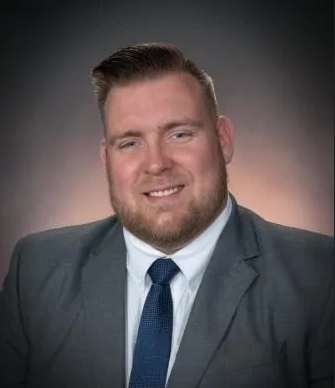
“It allowed me to hit the floor running,” Gregory said. “Most of the professors had their own practice experience. They gave us real-life scenarios. I’ve been able to take what I learned and apply it right away.”
Gregory also credited Widener Law Commonwealth's Raising the Bar Fund, which provides financial assistance to graduates during bar preparation, with giving him the ability to devote his full attention to studying during the critical weeks leading up to the exam.
Funded through alumni support and proceeds from the law school's 35th Anniversary Gala, the program helps graduates devote their full attention to exam preparation. This summer, Widener Law Commonwealth awarded 17 Raising the Bar stipends to members of the class of 2026.
“Receiving the stipend completely changed my summer study schedule,” Gregory said. “Without it, I would have needed to find a job, which would have taken significant time away from studying. I truly believe it played a major role in helping me achieve the score I did.”
Gregory said the support allowed him to focus exclusively on bar preparation and gave him the opportunity to maximize the months leading up to the exam. He later passed the North Carolina bar exam and was sworn into practice shortly after graduation.
Meager, who now serves as an entry-level attorney with the Pennsylvania Department of Military and Veterans Affairs, remembers how quickly the transition from graduation to full-time bar study began.
“I started before graduation,” Meager said. “I took a week off after finals, spent time with family, and then jumped in because I wanted to get ahead of it.”
She approached the summer with the structure of a workday, arriving at the library each morning and leaving in the late afternoon. Lunch breaks with classmates became an important reset point during long study days.
“There were a few of us who would sit together for lunch every day,” she said. “Sometimes we didn’t even talk about bar prep. We just needed an hour to feel normal again.”
Meager, who also received financial assistance through the Raising the Bar program, said that backing was one of the most meaningful forms of support.

"The Raising the Bar stipend was a huge blessing," Meager said. "It allowed me to focus solely on studying rather than worrying about working or finances during those critical weeks."
Behind the stipend is a larger community of alumni and faculty committed to helping graduates succeed during one of the most demanding periods of their legal education.
"I am so grateful to our alumni who give generously to our Raising the Bar initiative and to those who attended our 35th Anniversary Gala," Dean cummings said. "That generosity truly reflects a commitment to students who would otherwise be forced to work during bar exam preparation. In addition, I am awestruck by our faculty who give of their time to bar coach our students during the summer. That steady coaching and voice of reassurance make such a critical difference for our bar takers."
Wilson, now an associate attorney with Thomas, Thomas & Hafer LLP in Camp Hill, developed her own disciplined routine centered on consistency.
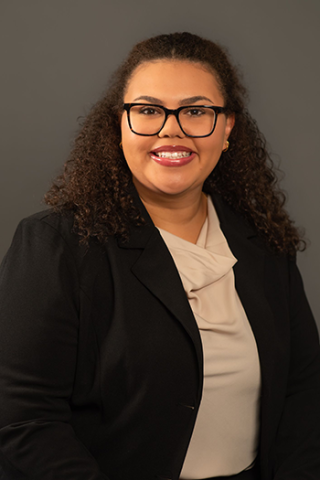
“People always say, ‘Treat the bar like a full-time job and you will be fine,’ and I truly think that was the case for me,” Wilson said. “I woke up early six days a week, went to the gym, and then went straight to the library.”
That structure became especially important as the pressure of the exam intensified.
“The best thing I could have ever done was create a routine and stick to it,” she said.
All three graduates described Widener Law Commonwealth’s faculty-driven support programs as an important bridge between law school and the bar exam itself. Programs such as Bar Boosters, Bar Boot Camps, and Writing for the Bar gave students repeated exposure to bar-tested subjects and exam writing before commercial prep courses even began.
Meager said the reinforcement helped her avoid feeling overwhelmed when studying started full time.
“The earlier you can reinforce information, the better off you are,” she said. “When I got stuck later, I could go back to my earlier notes and look at concepts from a different perspective.”
Wilson said one of the school’s greatest strengths was requiring students to take the core bar-tested subjects during law school.
“You do not have to fully start over when beginning the journey of studying for the bar,” Wilson said.
But even with preparation, the emotional toll of the process was real.
After receiving a discouraging score on a practice exam midway through the summer, Meager said she questioned whether her study strategy was working at all.
“I remember thinking, ‘What am I doing wrong?’” she said. “I felt like I had wasted time.”
Instead of spiraling, she reached out to Professor Susan Raeker-Jordan, who helped her identify patterns in the questions she was missing and rethink how she approached questions.
“Once I understood the smaller nuances in the law better, I knew exactly how to attack the questions,” Meager said.
Wilson discovered that managing stress often meant protecting her mindset as carefully as she protected her study schedule.
“It is very beneficial to have someone who is your accountability partner,” Wilson said. “But energy really is everything. When one person starts spiraling, the other feeds off it.”
She became intentional about limiting negativity around her during the final stretch of studying
“Having a losing mindset is so damaging,” she said. “If it can be avoided, it should be.”
Gregory said faculty mentorship helped steady him through the uncertainty that often comes with bar preparation. Working closely with Professor Michael Hussey, one of the law school’s faculty bar coaches, gave him confidence during difficult moments.
“You’re here for a reason. You’ve been successful in law school,” Gregory recalled being told. “Trust that the work you’ve put in is going to pay off.”
The lessons students carried into the exam itself often came from small moments in classrooms and conversations accumulated over three years.
Wilson still heard Professor Randy Lee’s reminders about disciplined legal writing while completing essay portions of the exam.
“Do not add fluff,” Wilson said. “It doesn’t get you any further.”
She also relied on a phrase from Jonathan Grossman’s AdaptiBar lectures whenever she caught herself overthinking multiple-choice questions.
“‘Shut up and pick it,’” she said with a laugh. “It stopped me from wasting time second-guessing myself.”
For Meager, encouragement came from both inside and outside the classroom. During the summer, her fiancé hung a blue “Believe” sign in their study room inspired by the television show “Ted Lasso.” Her mother later surprised her with a scrapbook filled with handwritten encouragement from family and friends before the exam.
“It was just this reminder that people believed in me, even when I was struggling to believe in myself,” she said.
Even now, months removed from the exam, each graduate says the habits and mindset developed during bar preparation continue shaping the way they approach practice.
“In criminal defense, you have people’s life and liberty at stake,” Gregory said. “I love being that person who can protect their due process rights.”
Meager credits Widener Law Commonwealth with giving her the confidence to pursue opportunities that were different than her previous experiences.
“I saw the job posting, and with the encouragement of Professor (Liz) Simcox, I decided to take the opportunity and apply.
Wilson said the confidence she developed at Widener Law Commonwealth still carries into practice every day.
“Widener really taught me how to use my voice,” she said. “You need to ask questions, advocate for yourself, and build those personal connections. That’s what makes this profession feel manageable.”