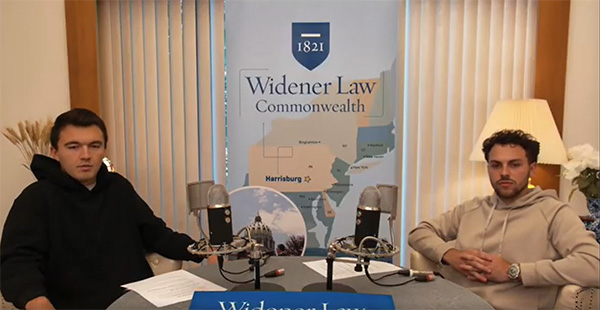
Owen Dougherty reaches for a pen. Enzo Fetsko works through his outline topic by topic. After four rounds of law school finals, the two friends have learned that preparing for exams starts with understanding how you learn best.
“Everyone has their own method,” Fetsko said. “I feel like people are successful in their own ways.”
That perspective guides “Law School Finals: Study Tips and Exam-Day Advice,” an episode of “Late Night in the Library,” the student-run podcast at Widener University Commonwealth Law School. The third-year students share what’s helped them prepare, from practicing essay answers to getting enough sleep, with encouragement for classmates finding their own routines.
For Dougherty, handwriting helps him work through the material and make connections.
“I’ll just handwrite the topic. I’ll make notes, make arrows. It helps me understand,” he said.
Fetsko has tried handwriting and flashcards, but he’s found that returning to his outline works best for him.
“I’m really big on just going through my outline as many times as possible, understanding it topic by topic,” Fetsko said.
Both generally prefer studying independently, then coming together to compare their understanding. That gives them space to work at their own pace while still learning from each other.
Their routines continue to evolve as they approach another finals season.
“We’re entering our fifth set of finals,” Dougherty said. “I think we’re still refining.”
One practice they both recommend is working through sample questions and past exams when professors make them available. Those exercises give students a chance to identify legal issues, apply rules to facts, and become familiar with the kinds of questions a professor asks.
The hosts also encourage students to compare practice answers with a classmate or seek feedback from an academic success fellow.
“The more you work with that material, the better,” Dougherty said.
That preparation extends beyond an outline. Mapping out exam dates helps students plan their study time, particularly when tests fall close together. Getting enough rest and keeping familiar routines also have a place in their approach.
On exam day, they encourage students to trust their preparation and take the time they need to organize their thoughts. Dougherty describes planning his answers on paper before beginning to type, giving himself room to consider the question and the points he wants to make.
Their advice includes reading what each question asks, budgeting time according to each section’s point value, and taking a breath when needed.
For Fetsko, building confidence begins well before exam day. He encourages students to ask questions throughout the semester and use office hours and academic success fellows to strengthen their understanding.
“Always start earlier than you think you should,” Fetsko said. “And the big key is having a running understanding throughout the semester.”
Dougherty closes with a reminder to recognize the work already done.
“Be confident in your abilities,” he said. “You put in the work through the semester.”