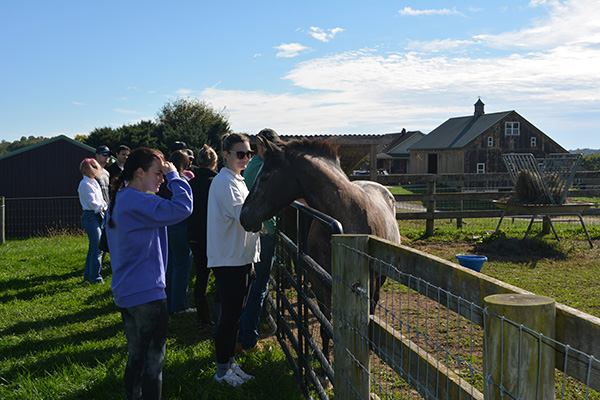
Meeting rescued farm animals recently at Lancaster Farm Sanctuary prompted Widener University Commonwealth Law School students to consider how the law treats animals and how their own experiences shape the questions they ask.
The Oct. 3 visit brought together students in the animal law seminar taught by D.S. Pensley, assistant professor of law and co-director of the Environmental Law & Sustainability Center, and members of the school’s Animal Legal Defense Fund chapter, along with students interested in agriculture. Jonina Turzi, a founder of the sanctuary, led the tour and shared the animals’ stories.
For Pensley, the visit connected classroom discussions with the lives of animals while giving students time together outside the seminar.
“Farm sanctuaries rescue and rehabilitate animals in that space where the law cannot reach,” Pensley said.
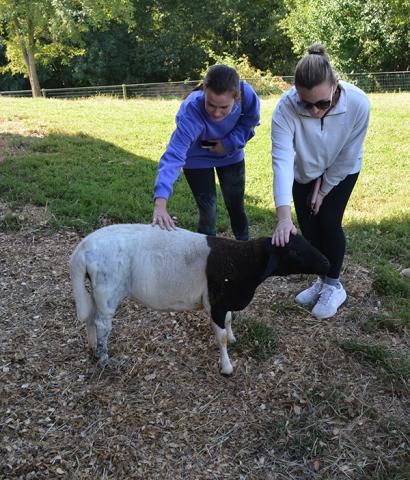
For Theresa Hanley, a third-year student from Elizabethtown, the visit put a familiar legal distinction in a different light: the line between the animals people keep as companions and those raised as livestock.
Hanley was struck by Turzi’s emphasis on giving animals a place to live without expecting them to produce something for people. Hearing about the close bond between a mother goat and her two daughters also left her questioning the categories people assign to animals.
“The animals are provided a space to just be animals,” Hanley said.
Those questions connect with a central lesson Pensley hopes students take from the seminar: animal law reaches across the legal curriculum.
Students have studied cases involving livestock as property, animals as victims of crimes, and the intersection of animal cruelty with First Amendment rights to speech and religious exercise. Their individual papers explore subjects ranging from the valuation of pets during divorce to the secretary of defense’s authority over endangered wildlife.
“Animal law is not at all a niche topic,” Pensley said.
Landon Miller brought a different background to those conversations. The second-year student from Johnstown, Pennsylvania grew up on a farm that raised animals for meat and is interested in agriculture law. Pensley, who taught him in property I last year, remembered that interest and invited him to join the trip, even though he wasn’t enrolled in the seminar. For Miller, who is seeking an internship with the state Department of Agriculture, the visit offered a chance to see firsthand how animal law affects people and animals.
A conversation about the sanctuary’s sheep stayed with him. Many had not had their tails docked, a practice that involves removing part of a sheep’s tail when it is young. Miller asked about the practice, opening a discussion about its benefits and potential harms.
“As someone who was raised in the agriculture world, I had never had a conversation before about the practice, and it was really insightful,” Miller said.
His background helped him explain the reasons behind some of the agricultural practices discussed during the tour. It also gave him a chance to hear the sanctuary’s concerns and consider a perspective different from his own.
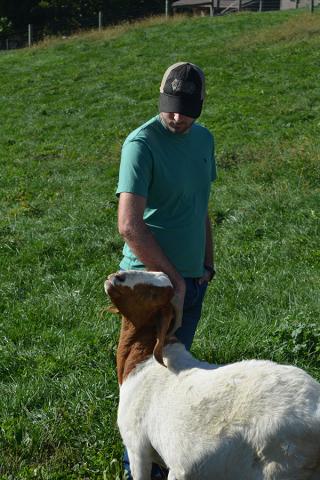
Miller was surprised to learn that the sanctuary avoids publicly identifying the places from which it rescues animals. He appreciated the emphasis on rescue and education.
For Alyssa Riley, a second-year student from Lancaster, Pennsylvania and treasurer of the school’s Animal Legal Defense Fund chapter, the pigs were especially memorable. She said learning about potbellied pigs adopted as pets and later abandoned made her appreciate the sanctuary’s work.
Riley joined the visit at Pensley’s invitation. Her interest in animal welfare includes finding more humane approaches to raising animals for food, and the tour left her wanting to explore those questions further.
“There needs to be more ethical ways of allowing society to eat meat without it being so harmful,” Riley said.
Hanley initially enrolled in the animal law seminar after enjoying Pensley’s property II course. She wanted to learn about property rights involving companion animals, but the seminar has introduced her to questions spanning criminal, tort, administrative and constitutional law.
At the sanctuary, she connected those discussions with the animals she met and the accounts she heard about their lives before rescue. The experience gave her more to consider about who receives legal protection and why.
For Pensley, the sanctuary also offered a peaceful setting to reflect on coursework that often examines violence against animals. They described the time together outdoors as a chance to bond and process difficult material.
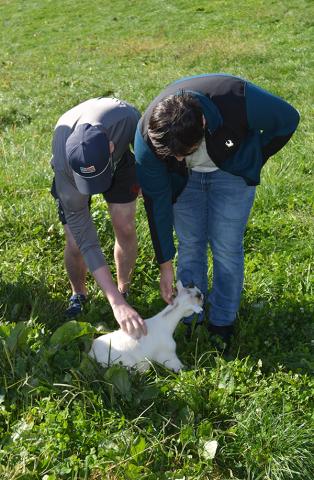
Several interactions stayed with them: Hanley cuddling with Jude, a cow with a cleft palate; Bill photographing Olivia, a potbellied pig; and Miller making faces at Tommy, a goat with frostbitten hind legs.
“This visit brought our hard work in class to examine and understand animal law full circle,” Pensley said.
Lancaster Farm Sanctuary is a nonprofit that rescues farmed animals and provides them sanctuary. Through public education and collaboration with other organizations, it works to improve the lives of people and animals and encourage compassion and respect.