Amy Groff ’04
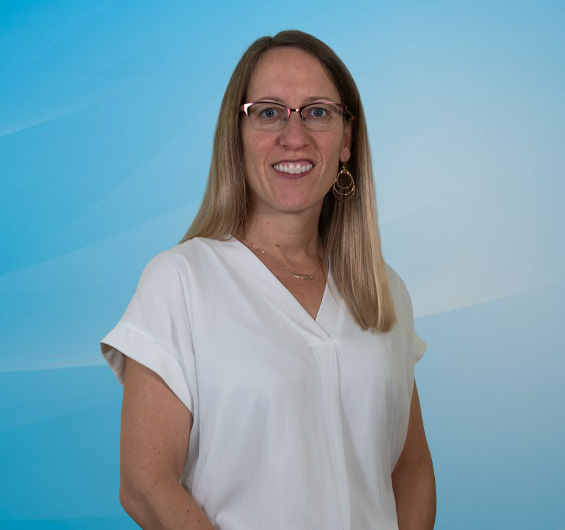
Amy Groff ’04 has built her career around one steady conviction: the law should expand opportunity, not limit it. Today, as a partner at K&L Gates and vice chair of the firm’s global Pro Bono Committee, she helps lead efforts that bring high-quality legal representation to people who might otherwise go without it. Pro bono work refers to legal services provided free of charge, typically for individuals or organizations that cannot afford an attorney. But her path to that role started in a very different place.
Long before she stood in courtrooms or helped shape a global pro bono strategy, Groff was an investigator with the U.S. Department of Labor. Fresh out of college, she worked in the Wage and Hour Division, the branch of the agency that ensures workers are paid fairly and receive legally required leave. She enforced federal employment laws like the Family and Medical Leave Act, which gives eligible employees the right to take unpaid leave for certain family or medical reasons without losing their jobs, and the Fair Labor Standards Act, the federal law that sets minimum wage, overtime pay requirements, and child labor protections.
“I was digging into regulations, statutes, and policy every day,” Groff said. “That was the first time I really started thinking about doing something in law.”
Her work earned her the Secretary of Labor’s Exceptional Achievement Award, but more importantly, it sparked questions about how laws are written, enforced, and experienced. When she decided to attend law school, Widener University Commonwealth Law School, then known as Widener University School of Law, felt like the right fit.
“I was drawn to Widener because it was a smaller school and didn’t feel cut-throat,” she said. “It also allowed me to stay in central Pennsylvania and continue my job with the Department of Labor on a seasonal and part-time basis.”
At the time, she imagined a future in public service, maybe with the Department of Labor’s Solicitor’s Office or in legal aid. Big law was not part of the plan.
“In fact, I interviewed and took a summer associate position at a big firm just so I could give it a try and likely rule it out,” she said with a laugh. “But I ended up really liking the work and the people. And I’m still here more than 20 years later.”
Groff graduated as valedictorian, yet what she remembers most about law school is not a GPA or a single accomplishment. It is the sense of community, and a moment that shaped an entire generation of students.
“The morning of 9/11 is seared in my mind,” she said. “It was my first year of law school. I was following the news before class, and by the time I arrived on campus, the FAA had grounded all flights. Students from another section were just coming out of property and hadn’t yet heard. We all went into contracts together trying to process what was happening.”
She also credits her work in the civil law clinic as transformative. Preparing a brief before the Pennsylvania Superior Court and representing a real client gave her an early understanding of what it meant to carry responsibility as a lawyer.
“That experience gave me a sense of what it was like to be a lawyer,” she said.
After graduation, Groff joined the firm now known as K&L Gates, where she built a practice spanning employment law, commercial litigation, and appellate work. The early years were intense, but they confirmed she had chosen the right path.
“Everything was new, and I worked really hard,” she said. “I remember feeling relieved that after getting through law school, I actually liked practicing law.”
Her personal life was evolving just as quickly. She welcomed her first child at the start of her second year in practice. Returning to work shifted her perspective.
“It helped me not just focus on work,” she said. “You start to think differently about balance and priorities.”
From the beginning, pro bono work ran alongside her billable practice. Her first client was an inmate, and as a brand-new associate, she remembers feeling unsure.
“My client sent me a very nice letter about how great the brief was,” she said. “I’m sure that was more a reflection of his gratitude than the quality of my work, but it gave me a confidence boost. I also had my first appellate oral argument in that case.”
Over time, pro bono work became central to her professional identity. Today, as partner and vice chair of the firmwide Pro Bono Committee, Groff helps guide local and global initiatives designed to expand access to justice. Her role blends big picture strategy with the daily work of supporting lawyers across offices and practice groups.
“Leadership combines strategy and hard work,” she said. “It’s listening to lawyers, building opportunities aligned with their interests, and making sure pro bono work is supported, recognized, and impactful. It also means celebrating the work our lawyers are doing and making sure our clients are getting the quality legal services they deserve.”
Some cases stay with her long after the file is closed, especially those involving individuals who have experienced exploitation or abuse.
“After you hang up the phone or hit send on an email, it’s hard to stop thinking about them and what they’re going through,” she said. “But they’re often incredibly resilient. Their strength and their stories are inspirational.”
Looking back, Groff sees a direct line from her Widener Law Commonwealth experience to the work she leads today.
“I think the law school cultivates a culture of service,” she said. “It teaches students that the practice of law is a profession, with professional and ethical obligations that go beyond just doing a job for money.”
When asked what she would tell current law students, Groff does not hesitate.
“Early in your career, get experience in areas that interest you and involve issues you’re passionate about,” she said.
“Seek out pro bono work, serve on a nonprofit board, engage in community service. Be honest with yourself about whether your work is satisfying and where you want to invest your time and energy.”
More than two decades after graduating as valedictorian, Groff’s work still reflects the same thread that first drew her toward the law. Whether enforcing wage protections as a young investigator or leading a global pro bono effort today, she has stayed grounded in the belief that the law can, and should, serve people well.
Interview conducted in Spring 2026.