
Helping the Helpers: Gabriella Romeo ’21 leads statewide survivor advocacy at PCAR
Gabriella Romeo ’21
Image
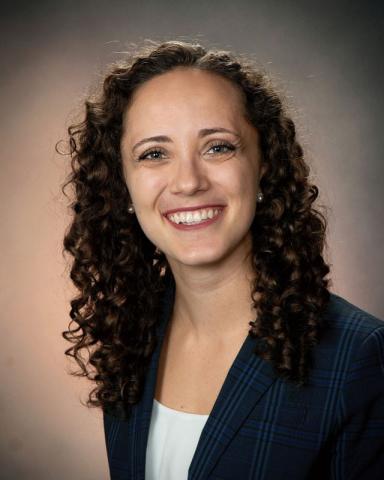
Gabriella Romeo arrived at Widener Law Commonwealth in 2018 thinking she was simply taking the next step toward earning a law degree. She did not realize she was stepping into a community that would shape her future and keep her rooted in Harrisburg long after graduation.
Romeo grew up in DuBois in Clearfield County, a small town about an hour west of State College, where she first learned how laws affect everyday life. She still remembers watching the old “Schoolhouse Rock” video on how a bill becomes a law and realizing that behind every rule or statute was a real person trying to solve a real problem. She carried that curiosity with her to Duquesne University, where she studied political science and integrated marketing communications before deciding to pursue law school.
“I applied to schools across Pennsylvania, but Widener Law Commonwealth was the one that changed my life,” she said. “I didn’t know anyone here when I applied. Once I arrived, I found mentors and a community that guided me through every step.”
One of the first people to leave a lasting impression was Randi Teplitz, dean of students and adjunct professor. Romeo had Teplitz during her first semester and still describes her as one of the most influential people in her life. Teplitz encouraged her to explore public interest work and pointed her toward an internship at the YWCA of Greater Harrisburg’s Domestic Violence Legal Center. Romeo already cared deeply about supporting survivors, but she did not expect how quickly the work would change her.
“It was heavy work and very emotional at times, but the attorneys at the YWCA taught me how to prepare for that,” she said. “They talked openly about secondary trauma, self-care, and what it means to support people through the hardest moments of their lives. That experience confirmed that public service was where I wanted to be.”
She later learned that Teplitz helped build that very program early in her own career, something Romeo still calls a full-circle moment. That connection set the tone for her years at Widener Law Commonwealth and helped her see the legal field as a place where meaningful relationships and meaningful work often sit side by side.
On campus, Romeo poured the same energy into student life. She held a long list of leadership roles, including president of the Student Bar Association, co-president of the Women’s Law Caucus, a member of Phi Alpha Delta and the Public Interest Law Society, a student ambassador, an SBA mentor, and a pupil member of the Lipsitt Inn of Court. Classmates often joked that she was the “face of Widener” because she seemed to be everywhere at once.
“I liked being involved because it helped me find my people,” she said. “Law school is intense, and having a community matters. For students who aren’t sure what to join, try at least one thing that interests you. You might end up finding something that shapes your whole path.”
Her path shifted again in early 2020 when the COVID-19 pandemic shut down classrooms across the country. Romeo remembers the uncertainty of moving everything online, the challenge of preparing for finals on Zoom, and the strange reality of studying for a virtual bar exam.
“It was a really difficult time, but my classmates and I leaned on each other,” she said. “Even though we lost a year and a half of in-person experiences, we were incredibly close as a class. Walking across the stage at graduation felt like something we accomplished together.”
Image
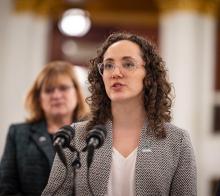
Today, Romeo serves as public policy director for the Pennsylvania Coalition to Advance Respect, the statewide organization that supports rape crisis centers in all 67 counties. She describes her work as “helping the helpers,” which means she acts as a bridge between local advocacy programs and state lawmakers.
She pushes for laws that strengthen survivor support, advocates for state funding, helps programs interpret complex legal requirements, and meets with legislators to explain how policy changes will affect survivors on the ground. She also guides programs through the legislative process and helps them build relationships with their local representatives.
“It’s a JD-advantage role, which means I use my legal education every day even though I’m not practicing in a courtroom,” she said. “I read and interpret statutes, analyze policy, and advocate for laws that support survivors. It’s meaningful work that lines up with who I am as a person.”
For students who hope to work in advocacy or policy, she recommends starting with curiosity and courage.
Image
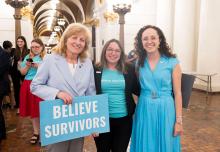
“Talk to people who are doing the work you think you might want to do,” she said. “Ask questions, take a chance on an internship that feels a little outside your plan, and don’t be afraid to try something unexpected. You might discover the thing you were meant to do.”
Looking back, Romeo feels grateful for the people who opened doors, encouraged her to take risks, and helped her understand what kind of lawyer and advocate she wanted to become.
“My experience at Widener Law Commonwealth changed my life,” she said. “I met professors and friends who helped form the woman I am now. Everything happens for a reason, and looking back, I wouldn’t change a thing.”
Interview conducted in Winter 2025.


