Inder Deep Paul ’16
From Chandigarh to Courtroom: Widener Law Commonwealth Alumnus Builds a Litigation Career Grounded in Grit and Connection
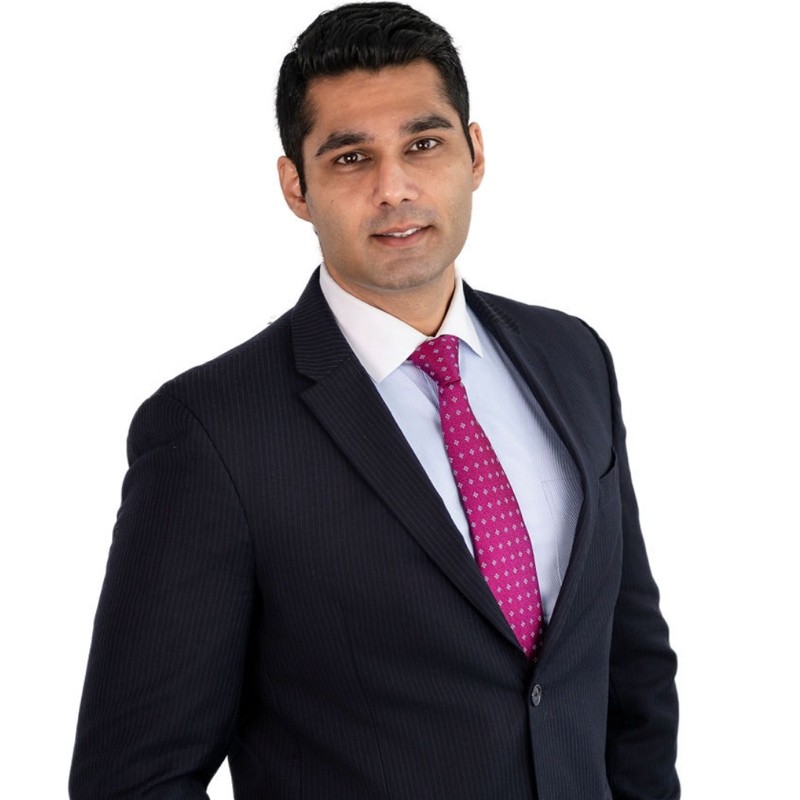
“It pays to be a good person. I can’t emphasize that enough. The relationships you build will shape your career in ways you don’t even see coming.”
When Inder Deep Paul ’16 sat down for an interview, he offered a quick heads-up. His phone might ring at any moment. A call from the Pennsylvania State Police about a fatal accident could come in, and if it did, he’d have to take it.
That’s the nature of his work.
Today, Paul is a partner at Weber Gallagher LLP, where he focuses on commercial transportation litigation and represents major motor carriers in high-stakes cases across state and federal courts. His days can pivot in an instant, from drafting discovery responses to coordinating real-time accident investigations. It’s fast, demanding work, and exactly where he wants to be.
“I wake up excited to go back and do it all over again,” he said. “You’re trusted to handle something important from start to finish. That’s a privilege.”
Paul’s path to that work started thousands of miles away.
He grew up in Chandigarh, India, where he enrolled in a five-year law program that combined undergraduate and legal studies. He completed four years before receiving a green card and making the move to the United States in 2013. Within months, he was enrolled at Widener Law Commonwealth.
“It was a whirlwind,” he said.
On paper, he felt prepared. He had already studied contracts, constitutional law and other foundational subjects. But once classes began, he quickly realized the transition would be more complex.
“The approach here is very fact-oriented,” he said. “A small change in facts can completely change the outcome. I thought I had a handle on it, but I had to relearn how to think.”
That adjustment required letting go of what he had learned and rebuilding his approach to the law from the ground up.
“I knew I wanted to practice here, so I told myself, you’ve got to forget what won’t apply and replace it with what will.”
At Widener Law Commonwealth, Paul found not only that new framework, but also the people who would shape his career.
He points to several faculty members whose influence still shows up in his work today. Emeritus Professor Michael Cozzillio left a lasting impression early on. Emeritus Professor James Diehm helped spark his interest in litigation through the interplay of evidence and procedure. And former Professor Dionne Anthon sharpened his writing, to the point that Paul still revisits his work with what he calls a “Dionne lens.”
But when he talks about the turning point in his career, one name comes up again and again: Professor Christopher J. Robinette.
“I cannot talk enough about Professor Robinette,” Paul said. “He is the reason for a lot of my career.”
After graduation, Paul didn’t immediately have a position lined up. What happened next still stands out for him.
Through a conversation at a barber, Robinette connected Paul with attorney Gary Stewart, who was looking for an associate. That introduction led Paul into transportation litigation, a field he hadn’t necessarily planned on but quickly embraced.
“I didn’t set out thinking, this is what I’m going to do,” he said. “I wanted to litigate. That was it. And then you fall in love with the work you’re doing.”
Paul started his career at Rawle & Henderson, later seeking trial experience with the Pennsylvania Office of Attorney General, where he served as a deputy attorney general. There, he gained hands-on courtroom experience and mentorship, including trying a federal case on behalf of the Pennsylvania State Police as second chair.
Eventually, he returned to private practice, reconnecting with Stewart in what Paul describes as a full-circle moment that underscores the importance of relationships.
“Those connections matter more than you think,” he said. “Not just for your first job, but for everything that comes after.”
Today, Paul is a partner following his firm’s transportation practice through a department merger in 2024. His work centers on representing commercial carriers, companies that operate on a national and global scale and rely on attorneys like him when incidents occur.
“When there’s an accident, you’re it,” he said. “From the moment it happens to trial, you’re guiding everything.”
That responsibility is what drives him.
“It’s pressure, sure. But it’s also trust. These companies can choose anyone, and they choose you.”
There’s no typical day in his role. One moment he might be managing ongoing litigation, the next he’s responding to an urgent call about an accident, coordinating with investigators, preserving evidence, and advising clients in real time.
“You sit down with a plan for the day, and then the phone rings,” he said. “And suddenly, everything shifts.”
The work requires constant movement, organization and the ability to stay steady in the middle of competing demands.
“You’ve got to be comfortable being uncomfortable,” he said. “That’s litigation.”
Looking back, Paul doesn’t measure his success by grades or accolades. He remembers not being the top student, not winning awards. What mattered more, he said, was how he showed up.
“I did my work. I was respectful. I built relationships,” he said. “And that’s what carried forward.”
If he could go back and speak to law students now, his advice would be simple.
“Talk to the people around you,” he said. “Your classmates, your professors, the people a few years ahead of you. Those are the people who will refer you work, bring you opportunities, and help shape your career.”
And above all:
“Be a good person,” he said. “It matters more than anything else. More than being the best student. More than anything.”
Interview conducted in Spring 2026.