
“Be in the Driver’s Seat of Your Career:” Ryan J. Cassidy ’96 Shares Advice for Future Lawyers
Ryan J. Cassidy ’96
Image
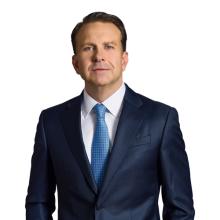
When Ryan Cassidy was appointed to the Disciplinary Board of the Supreme Court of Pennsylvania in April 2025, it marked another milestone in a career built on intentionality and strategic relationship-building. As chair of the labor and employment group at national law firm Eckert Seamans, Cassidy has spent decades helping employers navigate some of their most complex workplace challenges—and he's done it by following advice he now shares with the next generation of attorneys.
"You have to think about how to get in the driver's seat of your own career," Cassidy says. "Be proactive and meet people early in your career who could become clients years down the road. Do the legwork now to establish yourself as an expert in a specialized field or industry niche within the broader legal profession. This investment of time and effort does not produce results overnight, and it can be difficult and tedious, but when an opportunity arises, you will be ready to capitalize on it."
It's advice borne from experience. Cassidy, a 1996 graduate of Widener University Commonwealth Law School, knew he wanted to be a lawyer when he was in elementary school. That early clarity of purpose has carried him through a distinguished career—from clerking for the Commonwealth Court of Pennsylvania to becoming a partner at Reed Smith LLP in 2004, and ultimately joining Eckert Seamans in 2011. He now holds a senior management role, serving on the firm's executive committee and as chair of both the compensation committee and the labor and employment practice.
Today, Cassidy helps employers across the region navigate complex workplace issues, representing employers in the context of labor negotiations and labor arbitrations, defending employers in employment-related litigation and advising clients on compliance with a complicated web of state and federal workplace laws. He also provides due-diligence advice and support in corporate transactions.
"Employment law is about defending companies in claims involving alleged discrimination or violations of laws such as the Family and Medical Leave Act, the Americans with Disabilities Act, and Title VII of the Civil Rights Act," Cassidy explains.
The distinction matters in practice, he notes. "Labor law is more about engaging in collective bargaining with the representatives of unionized workforces to reach an agreement that is economically and operationally advantageous and sustainable for the employer, while at the same time reasonable from the standpoint of the workers and union. They're related but distinct areas, and a normal day for me typically entails both."
Formative Years at Widener
Cassidy came to Widener Law Commonwealth during a highly competitive admissions cycle. Growing up in Horsham, Pennsylvania, he had narrowed his choices to in-state law schools, and Widener offered the right combination of rigor and community.
He immersed himself in his studies and took on leadership roles, most notably serving as executive managing editor of the law review. "It was challenging, but it created bonds that still last today," he recalls. Those long hours working with classmates to produce the Harrisburg campus’ flagship legal journal taught him as much about collaboration as it did about legal writing and attention to detail.
Professors also shaped his trajectory. Labor law Professor Michael J. Cozzillio and criminal law Professor James W. Diehm brought infectious enthusiasm to their subjects. Additionally, then-Adjunct Professor Mark Fontana guided Cassidy toward Reed Smith after his appellate clerkship and helped him find his calling in labor and employment law. Today they remain partners together at Eckert Seamans, a testament to relationships that have endured for decades.
Leading Through Crisis
As firm-wide chair of Eckert Seamans' labor and employment practice, Cassidy balances firm leadership with client advocacy. He's witnessed firsthand how global events can reshape the legal landscape—nowhere more dramatically than during the COVID-19 pandemic.
"All areas of the legal profession and most areas of life in general were profoundly impacted by COVID, but, in my view, the employment setting was among the most profoundly affected," he says. "We worked with hundreds of clients on virtual workplace policies, vaccine requirements, downsizing to meet new staffing needs, and novel compliance issues. It was a familiar area of law, just on a much larger scale."
The pandemic transformed everyday employment questions into urgent, unprecedented challenges. Clients needed immediate guidance on whether they could require vaccines, how to implement remote work policies that complied with wage and hour laws, and how to navigate reduction-in-force decisions that intersected with new federal leave requirements. Cassidy and his team provided real-time counsel as regulations evolved, often having to interpret new guidance within hours of its release to help clients make critical decisions.
The experience reinforced a lesson Cassidy learned early in his career: being in the driver's seat means being prepared to navigate unexpected terrain and making a regular habit of putting in the effort necessary to stay at the forefront of your area of expertise.
Giving Back to the Profession
His appointment to the Disciplinary Board of the Supreme Court of Pennsylvania represents another dimension of that leadership. In this six-year term, Cassidy helps oversee attorney discipline and licensing state wide, ensuring that lawyers across Pennsylvania uphold the ethical standards of the profession.
"It's both an honor and a responsibility to serve the profession," he says. The role requires careful judgment and a commitment to protecting both the public and the integrity of the legal system—values that have guided his entire career.
Advice for the Next Generation
For law students charting their own paths, Cassidy emphasizes the importance of developing niche expertise early and building genuine relationships within their chosen field.
"Don't wait for your career to happen to you," he advises. "Attend events and conferences in your target industry or topical field.”
Building visibility takes deliberate effort, Cassidy notes. “Develop connections by volunteering for charitable organizations and committees. Write articles and offer to speak at venues where you can impress potential future clients with your command of a subject matter. Make yourself visible to the people doing the work you want to do someday. When an opportunity arises five or ten years later, you want them to already know your name."
It's about more than networking — it's about becoming well-known as someone preeminent in your area of law and to whom colleagues turn for expertise. That’s the kind of practical wisdom that comes from someone who has spent decades in the driver's seat—and Cassidy knows exactly how he got there, starting at Widener Law Commonwealth.
Interview conducted in Winter 2025.


