Ryan Stark ’07
Blends Law, Teaching, and Service to Support the Nation’s EMS Professionals
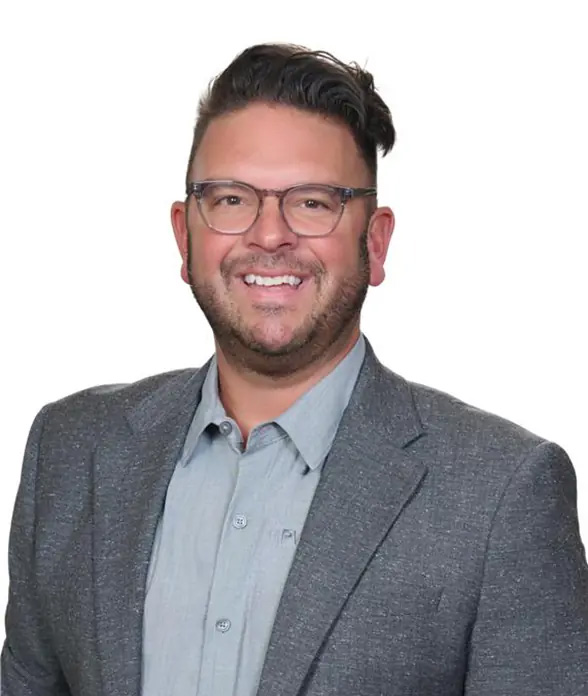
Ryan Stark ’07 has built a career that rarely operates behind a desk. On many client visits, the managing partner at Page, Wolfberg & Wirth, the nation’s only law firm devoted exclusively to emergency medical services law, trades the conference room for the back of an ambulance, riding along with paramedics to see how emergency medical services operate in the field. For Stark, understanding the realities of EMS is essential to serving the professionals who dedicate their lives to caring for others.
Stark grew up in Lancaster County and took what he describes as a nontraditional route into higher education. After high school, he attended Harrisburg Area Community College before transferring to Indiana University of Pennsylvania, where he double majored in political science and psychology. At the time, he was still figuring out his direction.
“I wasn’t entirely sure what I wanted to do,” Stark said. “But after some strong encouragement from one of my professors, it became clear that a law degree could open a lot of doors.”
That realization eventually brought him to Widener University Commonwealth Law School, where he graduated in 2007. As a first-generation college graduate, the experience marked a significant milestone.
Even before law school, Stark had begun exploring the healthcare field. While in college, he worked at a local hospital and in a local pharmacy. The experience introduced him to the complicated web of regulations that shape the healthcare system and sparked an interest that would ultimately define his career.
Today Stark advises EMS organizations across the country on privacy compliance, labor relations, reimbursement issues and regulatory challenges. His work has taken him to rural communities, major cities, and everywhere in between.
“I’ve been to some incredibly different places,” he said. “From Amish country to remote islands in Washington State. The amazing thing is that no matter where you go, people really want the same basic things out of life.”
His entry into EMS law began during his time at Widener. Stark knew he wanted to work in healthcare law, so he sought out an internship with attorney Douglas Wolfberg ‘96, one of the founders of Page, Wolfberg & Wirth (PWW) and a longtime adjunct professor at the law school. The experience quickly turned into something more permanent.
Before Stark even sat for the bar exam, PWW offered him a full-time position with the firm. Nearly two decades later, Stark is now one of its managing partners.
A typical day rarely looks the same. Mornings often begin with reviewing regulatory developments or policy changes that might affect EMS providers. From there, Stark might spend time advising clients, writing educational materials for the industry, or leading training sessions for EMS leaders across the country.
When he visits client organizations in person, he makes a point of learning how the entire system works, not just the management side of it.
“I’ll meet with leadership during the day,” Stark said. “But I also run calls with the ambulance crews. If you really want to understand your clients, you need to understand what their day-to-day life looks like.”
Those ride-alongs have provided moments that continue to shape how he sees both his profession and the communities EMS providers serve.
During one visit to Los Angeles, Stark spent time riding with paramedics near Skid Row. A conversation with one responder stuck with him.
“He told me about transporting someone whose life story completely changed how he viewed that person,” Stark recalled. “It was a reminder that we often make assumptions about people without understanding what they’ve been through.”
Experiences like that reinforce the reason Stark enjoys his work.
“It’s such a difficult and often thankless job,” he said of EMS professionals. “Being able to support people who devote their lives to helping others brings a lot of satisfaction.”
Stark’s role at the firm goes well beyond traditional legal work. Education plays a central role in what he does. He regularly teaches and presents at industry conferences and seminars, helping EMS leaders navigate complex legal and regulatory issues.
He also serves as an adjunct professor at Creighton University, where he teaches a course on EMS risk management in the university’s master of science in emergency medical services program. Closer to home, he occasionally teaches legal sessions for medical first responders at HACC, focusing on risk management and common legal pitfalls in the field.
That emphasis on education reflects the philosophy Stark and his colleagues bring to their practice.
“We try to be practical,” he said. “Our goal isn’t to hand clients a long memo. We want to give them clear, actionable guidance that helps them solve a problem.”
The EMS industry itself is evolving rapidly. Many organizations are shifting away from a model focused primarily on transporting patients to hospitals and toward providing treatment in homes or community settings. Stark and his colleagues often work with providers and policymakers to help shape those emerging frameworks.
“We’re trying to stay ahead of where the law is going,” he said. “If you can bring legislators a model that already works, you’re much more likely to end up with policies that actually make sense for the profession.”
While at Widener, Stark immersed himself in several student activities, including trial advocacy and moot court. One project helped create a new opportunity for future students.
Working alongside classmate and future Pennsylvania Attorney General Dave Sunday, Stark participated in the law school’s first international moot court team. The effort was guided by environmental law scholar John Dernbach, who coached the students and traveled with them to New York for the competition.
The experience left a lasting impression.
“We didn’t have a deep background in international law,” Stark said. “What it really taught me is that preparation matters. No matter how smart you are, someone can always outwork you.”
Another course that stood out during law school was criminal procedure with Professor James Diehm, whose practical insights into the legal system resonated with Stark.
“He brought a lot of real-world experience into the classroom,” Stark said. “It made the subject matter much more tangible.”
Beyond academics, Stark said Widener reinforced something else that continues to shape his life: the importance of giving back.
He has volunteered with Big Brothers Big Sisters for more than two decades and continues to be a “big” and stay in touch with his former “littles.” He also participates in the state’s high school mock trial competitions in Dauphin County, helping students experience the courtroom for the first time.
“That spirit of volunteerism is something Widener always encouraged,” he said. “It’s one of the things that stuck with me the most.” Stark also serves as a board member of the Peyton Walker Foundation, a locally based nonprofit that has grown to one of the country's prominent heart screening advocates and leaders in providing CPR and AED training.
Looking back now, Stark said he would offer one simple piece of advice to his law school self and to students beginning the same journey.
“Take a breath and don’t sweat the small stuff quite as much,” he said. “Law school can feel intense, but the legal profession today is much more collaborative than people expect.”
He has found that collaboration, mentorship, and a willingness to listen often make the biggest difference in practice.
“At the end of the day, the best feeling is knowing you helped someone solve a problem,” Stark said. “If a client can hang up the phone and feel like they have a plan, that’s incredibly rewarding.”
Interview conducted in Spring 2026.