
Widener Law Grad Guy D’Andrea ’08 Builds a Career Fighting for the Silenced
When Guy D’Andrea, a 2008 graduate of Widener University Commonwealth Law School, steps into a courtroom, his mission is clear: to be the voice and the shield for those who’ve been silenced. As co-managing partner at Laffey, Bucci, D’Andrea Reich & Ryan, he has built a career representing survivors of sexual violence, physical abuse, bullying, and hazing—cases that demand not only legal skill but deep empathy and unshakable resolve.
“I became a lawyer because I believe in the fundamental truth that everyone deserves a champion in their darkest hour,” D’Andrea said. “Every case I take is a promise: I will be as relentless in pursuit of justice as their perpetrators were in causing harm.”
Before entering private practice, D’Andrea served as a Philadelphia homicide prosecutor, where he saw firsthand how the system can fail those who most need protection. That experience drives his work today, helping survivors rebuild their lives while holding powerful institutions accountable.
D’Andrea’s approach to law was forged during his time at Widener Law Commonwealth. “I chose Widener because I recognized it as a school that doesn’t just produce lawyers, it forges true litigators,” he said. “The professors taught us to be tough, thorough, and ready for the real battles ahead. That education didn’t just prepare me for a career, it prepared me for a calling.”
His work has recently drawn renewed national attention through the case of Ellen Greenberg, a Philadelphia teacher whose 2011 death was controversially ruled a suicide despite evidence suggesting homicide. D’Andrea was asked to reexamine the case four years later as a prosecutor and has since remained involved as an advocate for truth and accountability.
“What I found was not just an injustice, but a betrayal of everything our legal system should stand for,” he said. “Ellen deserved better. Her family deserves answers. The truth deserves to be heard.”
The case is now the subject of a Hulu docuseries, Death in Apartment 603: What Happened to Ellen Greenberg, where D’Andrea provides expert commentary and context. He believes media attention has played a vital role in ensuring the case remains in the public eye.
“Media coverage has been crucial in keeping Ellen’s case alive when the system wanted to bury it,” he said. “Sometimes sunlight truly is the best disinfectant.”
While the high-profile nature of his work brings challenges, D’Andrea remains focused on the individuals behind every case. “At the center of all that attention is a real person who suffered real harm,” he said. “My obligation isn’t to public opinion, it’s to my client and to the truth.”
For D’Andrea, the rewards of his work go far beyond verdicts and settlements. “The most rewarding aspect is witnessing transformation, seeing survivors reclaim their power and institutions forced to change,” he said. “When a survivor realizes they’re believed and that someone will fight for them as hard as they’ve fought to survive, that’s everything.”
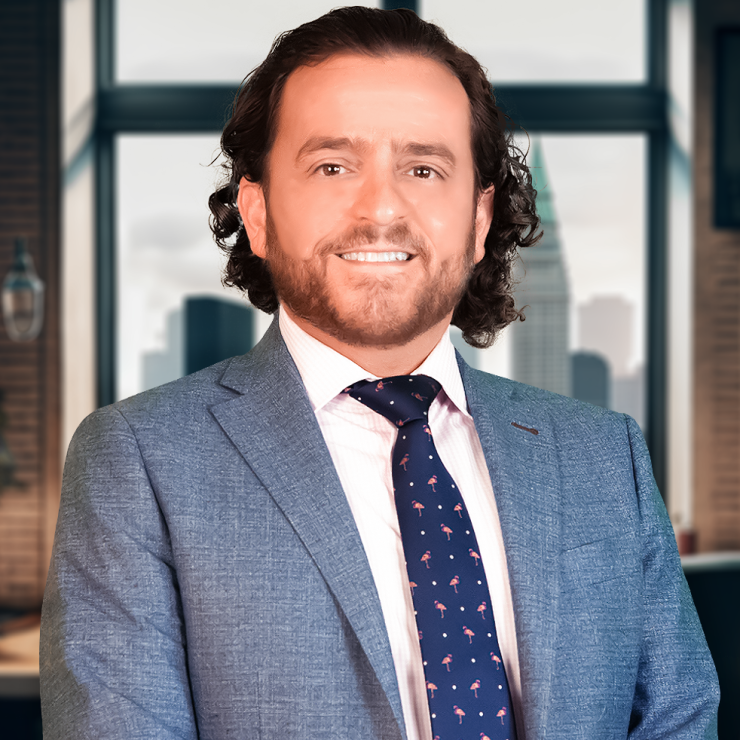 He encourages future lawyers to approach advocacy with the same grit and purpose that have defined his own career. “Don’t chase prestige or money—chase purpose,” he said. “If you want to be the difference between justice and injustice, then step up, speak up, and never stop fighting for those who need you most.”
How was this ruled a suicide? That’s one of many questions D’Andrea poses in Death in Apartment 603: What Happened to Ellen Greenberg. The three-part docuseries is now streaming on Hulu and available to learn more about on Laffey Bucci D’Andrea Reich & Ryan’s website.