How Clerkships Shape Legal Careers at Widener Law Commonwealth
For many Widener Law Commonwealth graduates, the most important classroom is not a lecture hall, but a judge’s chambers.
George Bibikos ’03 and Stefanie Pitcavage Mekilo ’11 took different paths to the law and clerked in different courts, state and federal. Yet both describe their time working in chambers as the single most formative experience of their professional lives.
“If I have any skill as a lawyer, it starts with that clerkship,” Bibikos said.
“My clerkships were formative in every way,” Mekilo echoed.
Their careers today, spanning complex environmental, energy, and regulatory litigation, reflect lessons first learned not as advocates arguing cases, but as clerks helping judges decide them.
Learning How Judges Think
Bibikos did not enter college with a clear plan. A criminal justice major and political science minor, he knew he did not want to become a police officer or politician. A criminal procedure professor who also served on a state Board of Pardons sparked his interest in the law.
“He told stories about being a lawyer, and I thought, ‘Yeah, I could probably do that,’” Bibikos said.
After graduating from Widener Law Commonwealth in 2003, he clerked for Judge Dan Pellegrini on the Commonwealth Court of Pennsylvania, the statewide appellate court that hears cases involving state government and its agencies and, in certain matters, serves as a trial court.
Inside chambers, he saw how cases are filed, how procedural rules shape outcomes, and how judges debate constitutional and statutory questions. He drafted opinions weekly.
“Legal writing is a critical competency of every lawyer, and the more you do it, the better you get,” he said. “Judge Pellegrini demanded accuracy, deep thinking, and speed. That training set me apart early in my career.”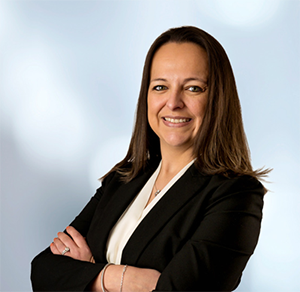
Mekilo had a similar revelation at the federal level. After graduating at the top of her class, she clerked for Judge John E. Jones III of the U.S. District Court for the Middle District of Pennsylvania and later served for more than a decade as career law clerk to Judge Christopher C. Conner.
“Working closely with two federal judges taught me not just how cases are decided, but why,” she said.
From her vantage point, she learned that credibility is currency in a courtroom.
“Trust is gained in drops and lost in buckets,” Mekilo said. “An imprecise statement of the law, even if unintentional, can cause a judge to question your entire argument.”
Both alumni say the clerkship experience sharpened not only their writing but also their judgment. They watched how judges weighed precedent against policy, how they evaluated competing narratives, and how small procedural missteps could alter the trajectory of a case.
“You step behind the curtain and learn directly from a judge what works and what doesn’t,” Mekilo said.
A Career Launched in Chambers
For Bibikos, the impact was immediate. As a young associate, he was assigned to a complex case involving an energy company seeking to develop resources under state lands. Because he understood the Commonwealth Court’s procedures and jurisdiction, he became a key member of the team. The case ultimately reached the Pennsylvania Supreme Court, where his client prevailed.

“That was my first oil and gas case,” he said. “It started me down this path I’ve been on for more than 20 years.”
Today, he is the founder and managing member of GA Bibikos LLC, advising clients in oil and gas, environmental, and administrative law matters. He still approaches cases with the mindset he developed as a clerk, asking not only how to frame an argument, but how a judge is likely to analyze it.
Mekilo carries the same perspective into her role as a shareholder at Saxton & Stump. A member of the firm’s Environmental, Workplace Safety and Utilities Group and its Business Litigation and Strategic Solutions Group, she represents clients in complex environmental, energy, and commercial disputes in state and federal courts nationwide.
“Having spent years inside courtrooms, I understand how different strategies are likely to play before a judge, law clerk or jury,” she said. “That perspective allows me to counsel clients more effectively and tailor our approach to the audience.” It also reinforced for her that developing a clear, consistent and digestible narrative is essential—a lesson that is especially critical for her current practice, where cases can involve decades of site history, complex regulatory schemes and highly technical scientific analysis. “Lawyers sometimes forget that the judge and jury haven’t lived with the issues for years in the way the parties have,” Mekilo said, “but if they can’t understand your argument, they can’t rule in your favor.”
Though their practices differ in structure and setting, both credit their clerkships with giving them a strategic edge that continues to shape their advocacy.
More Than Research and Writing
Clerkships are often described as apprenticeships in legal writing. Bibikos and Mekilo agree that repetition and rigor matter. But they say the experience offers something deeper.
Clerks see cases from complaint through motion practice and sometimes trial. They observe how judges manage crowded dockets, handle contentious counsel, and balance fairness with precedent. They see the human consequences behind legal disputes.
For students considering a clerkship, that immersion can be transformative, said Elizabeth Simcox, coordinator of externships and adjunct professor at Widener Law Commonwealth.
“The opportunity to do a placement in judicial chambers is invaluable on a number of levels,” Simcox said. “Students can learn from skilled jurists and lawyers on how judicial decisions are made, how conflict is handled amidst a variety of constituents, and how the legal world works from behind the bench. This informs students on how to practice in courts from a wide range of perspectives.”
She encourages students to learn about the courts they hope to enter and to take initiative once there.
“In my experience, the people working in these spaces want to help students succeed,” Simcox said. “Taking full advantage is key to maximizing the experience.”
For Bibikos and Mekilo, the message is simpler. A clerkship does not just polish a resume. It changes how a lawyer thinks.
“It gives you a front row seat to advocacy,” Mekilo said.
Bibikos puts it even more plainly.
“Just do it.”