
The most important lesson I’ve learned through this role is that no one can manage everything alone.
Rae Yoder ’27
Image
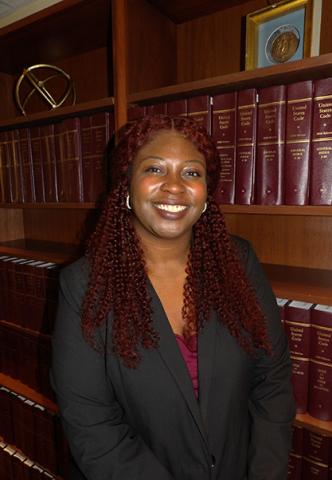
From a college classroom inside a local jail to a courtroom bench trial in Lancaster County, Rae Yoder has built her legal education around seeing the justice system up close and learning how to navigate it with care.
Now a third-year evening division student at Widener University Commonwealth Law School, Yoder serves as president of the Trial Advocacy Honor Society while balancing a full slate of advocacy, writing, and leadership roles that continue to shape her path toward a career in criminal law.
Yoder’s interest in the law began well before law school. As an undergraduate at Goshen College, a liberal arts institution in northern Indiana, she participated in an “Inside Out” course that brought college students into a local jail to learn alongside incarcerated individuals. The experience shifted her understanding of the criminal justice system from theory to reality.
“That experience significantly expanded my interest in the criminal justice system by allowing me to interact directly with people who had lived through it,” Yoder said.
She later completed an internship that included mediation training, working directly with both victims and perpetrators to resolve conflicts. After earning a master’s degree in criminal justice from Michigan State University, Yoder returned to Pennsylvania and began working at the Court of Common Pleas in Lancaster. Watching attorneys work day in and day out ultimately led her to apply to law school.
At Widener Law Commonwealth, Yoder says her classroom experience and hands-on opportunities have worked together to prepare her for practice. Courses in criminal law and evidence with Professor Michael Dimino proved especially impactful, giving her tools she could apply directly during her externship work.
Outside the classroom, trial advocacy quickly became a central part of her law school experience. Through the Trial
Advocacy Honor Society, Yoder has sharpened her courtroom skills in mock trial settings designed to mirror real-world practice. She has also been active in the Appellate Advocacy Honor Society, which strengthened her oral advocacy and public speaking confidence.
As president of Trial Advocacy, Yoder oversees a wide range of responsibilities that shift with the academic calendar. In the fall, that includes coordinating tryouts, planning the Fall Colloquium, and helping select competition teams. In the spring, the focus turns to the Hugh B. Pearce Internal Competition, one of the society’s largest and most complex undertakings. The competition pits teams from Widener Law Commonwealth against students from Widener’s Delaware Law School campus, giving participants hands-on experience litigating a full trial before judges and practicing attorneys.
That event requires coordination across campuses, along with judges, attorneys and law school staff. The experience has shaped Yoder’s approach to leadership.
“The most important lesson I’ve learned through this role is that no one can manage everything alone,” she said. “I’m incredibly grateful to work with an executive board that is organized, reliable and committed.”
The Trial Advocacy Honor Society emphasizes hands-on learning, allowing students to apply concepts from evidence and other courses in a mock courtroom environment. Practicing attorneys regularly provide feedback, helping students bridge the gap between doctrine and practice in a supportive setting.
Membership can be earned through fall tryouts or by competing in the Hugh B. Pearce Internal Competition, where students present a full trial as part of a prosecution or defense team. Yoder says both paths demand preparation and commitment but offer invaluable experience.
The society also competes at a national level, including the National Trial Competition in Philadelphia and the Academy of Trial Lawyers of Allegheny County competition in Pittsburgh. These competitions, often held in real courtrooms with judges and juries, come as close as possible to the experience of an actual trial.
One moment that stands out for Yoder came when she participated as a witness in a prior competition and experienced cross-examination firsthand. That perspective, she said, reshaped how she now prepares witnesses as an advocate.
Beyond trial work, Yoder’s involvement in Law Review and appellate advocacy has strengthened her research, writing and editing skills. Those experiences have also broadened her goals, sparking an interest in pursuing a clerkship after graduation.
Last summer, Yoder externed with the Lancaster County District Attorney’s Office, where she previously worked as a paralegal. During that externship, she handled a domestic violence bench trial, an experience that underscored the real-world consequences of legal work.
“It reinforced that our work as attorneys carries real-world consequences,” she said. “It made me more determined to approach every case with care and diligence.”
As graduation and the bar exam approach, Yoder remains focused on learning and gaining as much practical experience as possible. She’s confident that the advocacy training and leadership opportunities she’s had at Widener Law Commonwealth will continue to guide her as she begins her legal career.
“These experiences have helped me develop skills that I know will be invaluable,” she said.
Interview was conducted in Winter 2026.


